


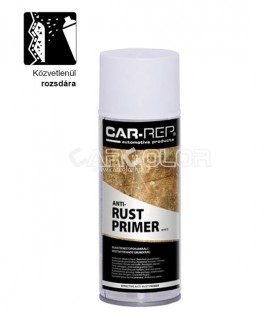

In stock
3,378 Ft
(tax incl.)
Online price
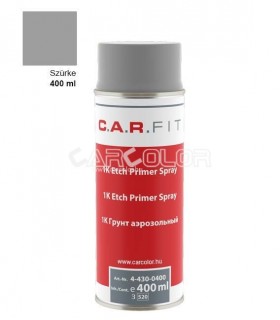
Professional rust inhibiting primer spray for long-lasting corrosion protection on metal surfaces. Ideal for car bodywork, chassis and structural parts, as well as gates, fences and industrial steel constructions. The special anti-corrosion formula helps prevent rust formation and spreading, improves adhesion for subsequent paint layers and can be overcoated with most common automotive and industrial topcoats. Choose a reliable anti-corrosion primer spray when you want durable protection and a solid base for your paint system.
Rust inhibiting primer spray is a specially formulated primer coating designed to protect metal surfaces against corrosion. It contains active anti-corrosion pigments and additives that create a protective barrier between the metal and moisture, salt and other aggressive environmental factors. It can be used on new bare metal to prevent rust formation, or as part of a repair process on previously rusted but properly prepared surfaces.
On car bodywork, chassis components, repaired panels, as well as around the home and in industrial environments, this type of primer is an essential step if you want to protect metal parts against rust, flaking and premature failure over the long term.
Anti-corrosion primer spray can be used in many areas where metal is exposed to weather, moisture or mechanical stress:
Proper priming increases the lifetime of the entire coating system, reduces the need for frequent repainting and saves money over time.
The performance of a rust inhibiting primer is based on two main principles:
Thanks to this dual effect, rust inhibiting primer spray is an ideal first layer under the topcoat, providing both adhesion and corrosion protection.
Important: always work in a well-ventilated area, use appropriate personal protective equipment (mask, gloves) and follow the safety and application instructions on the product label.
When choosing a rust inhibiting primer spray, consider the following:
If you are unsure which anti-corrosion primer is best for your task, it helps to describe the exact application and environment so you can receive a more targeted product recommendation.
Proper surface preparation is always essential. Without removing loose rust, flaking paint and contamination, the coating can soon peel off and rust may creep under the film. Ideally, the surface should be stable, lightly sanded and degreased so the rust inhibiting primer can adhere well and provide long-term protection.
Yes, many anti-corrosion primers are designed to be applied on slightly rusted but properly cleaned surfaces. However, all loose rust and unstable material must be removed first. The more thorough the mechanical cleaning (wire brushing, sanding), the more durable the final result will be.
Yes, most rust inhibiting primer sprays are formulated to provide a paintable surface. After full drying, the primer can be lightly sanded if necessary, and then overcoated with the appropriate topcoat (car paint, enamel, acrylic, etc.). Always check the manufacturer’s recommendations for compatible paint systems.
In general, no extra primer is required under an anti-corrosion primer, as it is designed to act as the first priming layer itself. In special cases (for example on galvanised steel or other difficult substrates), a dedicated adhesion promoter or special primer may be recommended – always refer to the product’s technical data.
Yes, on metal car body parts, rust inhibiting primer is often the first step of the complete refinishing system. A typical system would be: metal preparation → anti-corrosion primer → filler / surfacer → sanding → basecoat (colour) → clear coat. This way, bodywork repairs not only look good but also gain long-lasting protection.
Drying time depends on the product, film thickness and ambient conditions. As a general guide, surface dry may be achieved in 15–30 minutes, while recoat or sanding time may be 1–2 hours or more. Always follow the drying and overcoating times given on the can for best results.
Yes, rust inhibiting primer spray can be used on metal surfaces both indoors and outdoors, provided that ventilation and safety requirements are met during application. It is especially useful on outdoor structures that are exposed to rain, humidity and road salt, where corrosion can progress quickly.
The aerosol format is very user-friendly, so beginners can also achieve good results if they follow the basic rules: thorough cleaning, careful masking, several thin coats and patience with drying times. For complex structural work or highly stressed industrial applications, it may be wise to consult a professional, but for smaller repairs and renovation projects at home it is an excellent solution.
Please sign in first.
Sign inCreate a free account to save loved items.
Sign inCreate a free account to use wishlists.
Sign in





 English
 Magyar
&media=https://www.carcolor.hu/shop/12217-large_default/car-rep-anty-rust-primer-white-400ml.jpg)
&media=https://www.carcolor.hu/shop/12220-large_default/car-rep-anty-rust-primer-black-400ml.jpg)
&media=https://www.carcolor.hu/shop/12226-large_default/car-rep-anty-rust-primer-red-400ml.jpg)
&media=https://www.carcolor.hu/shop/12208-large_default/car-rep-anty-rust-primer-grey-400ml.jpg)
&media=https://www.carcolor.hu/shop/13326-large_default/car-fit-1k-etch-acid-primer-gray-400ml.jpg)
&media=https://www.carcolor.hu/shop/16671-large_default/car-fit-1k-epoxy-primer-400ml.jpg)
&media=https://www.carcolor.hu/shop/12028-large_default/spraymax-2k-epoxy-primer-filler-400ml.jpg)