Underbody Protection for Corrosion & Stone-Chip Resistance
Underbody protection is designed to protect suitable lower vehicle surfaces from moisture, road salt, stone impact, dirt and other environmental or mechanical exposure.
Vehicle floors, wheel arches, sills and lower body panels operate in demanding conditions, so the correct protective coating and surface preparation are important for long-term corrosion control.
Underbody protection is not one single coating type. The range includes aerosol products for local repairs, bulk sprayable and brush-applied materials, stone-chip coatings and specialist corrosion-protection systems.
Why Is Underbody Protection Important?
The underside of a vehicle is continually exposed to water, road salt, mud, grit and stone impact. Damage to the existing protective coating can expose metal and allow corrosion to develop.
A suitable underbody coating can help protect:
- vehicle floor panels,
- wheel arches,
- outer sill areas,
- lower body sections,
- existing sound factory underbody coatings after local repair.
Exact corrosion, stone-chip, chemical and mechanical resistance varies between products.
Choosing the Correct Underbody Protection
Bulk Underbody Coatings
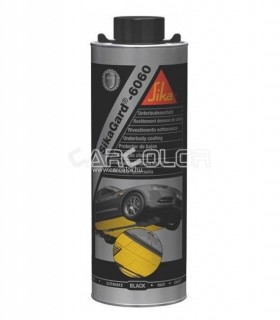
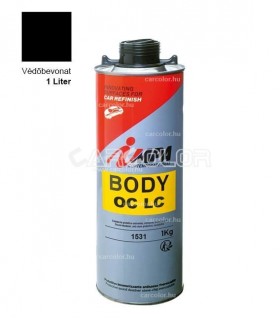
For larger repairs or complete underbody treatment, larger sprayable or brush-applied coatings can be more economical than aerosols.
The range includes bitumen-based, rubberised and other specialist systems intended for different substrates and application methods.
Underbody Protection Spray
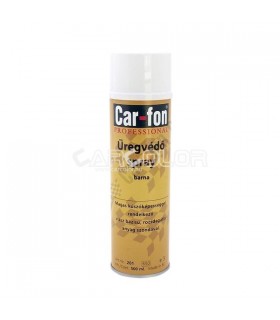
For local repairs and smaller areas, underbody protection spray provides a convenient aerosol solution without the need for a compressor or application gun.
Aerosol products can include bitumen, rubberised, paintable and stone-chip formulations.
Stone-Chip Protection
Stone-chip protection is designed for body areas exposed to mechanical impact, including sills, wheel arches and lower body sections.
Depending on the formulation, these coatings can create a flexible or textured finish and some can be overpainted with compatible automotive coatings.
Cavity Protection
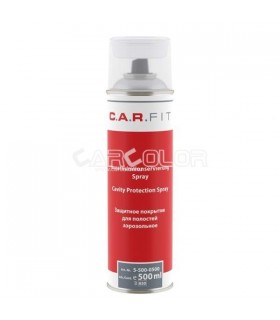
Underbody protection and cavity protection are different systems. Cavity products are intended for enclosed sections such as doors, internal sills and closed body profiles.
They typically use creeping wax-type materials designed to reach seams and difficult internal areas, while underbody coatings are intended for exposed lower exterior surfaces.
Bitumen, Rubberised or Paintable Underbody Coating?
Bitumen Underbody Coating
Bitumen underbody coatings generally form a relatively thick, flexible protective layer and are widely used on floors and wheel arches.
Some products also provide sound-damping properties. Not every bitumen coating can be overpainted.
Rubberised Underbody Coating
Rubberised or flexible coatings can provide suitable protection against stone impact and mechanical wear on approved substrates.
Exact weather, chemical and abrasion resistance remains product-specific.
Paintable Underbody Protection
Where automotive colour will later be applied over the protective layer, use an underbody or stone-chip coating specifically approved as overpaintable.
Recoat time and compatible topcoat systems vary between products.
Can Underbody Protection Be Applied over Rust?
Loose or active corrosion should not simply be covered with underbody coating.
Remove unstable rust, loose paint and poorly adhering coatings first. Exposed metal should then be prepared and primed where required by the selected coating system.
Severe or structural corrosion must be repaired correctly before protective coatings are applied.
Preparing the Surface
- Remove mud and road contamination.
- Degrease the surface.
- Remove loose rust and unstable coatings.
- Sand or prepare the substrate where required.
- Prime exposed metal if specified by the system.
- Allow the surface to dry fully before coating.
Primer type and preparation procedure depend on the individual product.
How Is Underbody Protection Applied?
- Aerosol: convenient for small and local repairs.
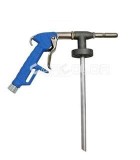
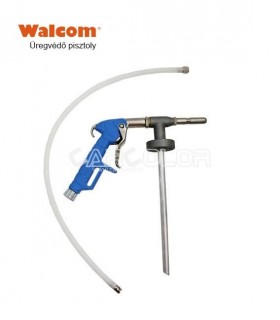
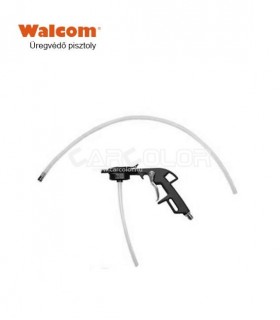
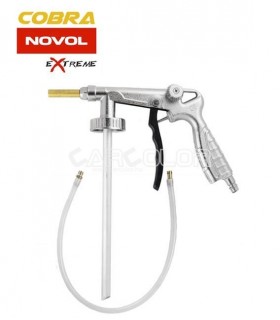
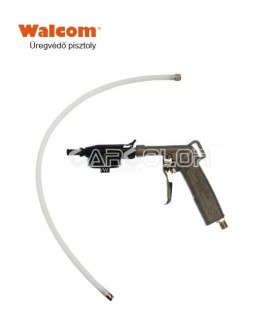
- UBS or undercoating gun: commonly used with larger sprayable packs.
- Brush application: suitable only for coatings specifically designed for brushing.
Coat count, film thickness, air pressure, drying time and overpaintability are product-specific. Always follow the technical data sheet.
Where Should Underbody Coating Not Be Applied?
Do not apply underbody coating to safety-critical or functional components where it could interfere with operation.
Avoid brake friction surfaces, unsuitable high-temperature exhaust components, moving parts, sensors, electrical connectors and drainage openings unless specifically permitted.
Which Underbody Protection Is Best?
There is no single best product for every vehicle. The correct system depends on whether you need a local repair, a complete underbody treatment, stone-chip protection, an overpaintable coating or corrosion protection for enclosed cavities.
Aerosols are convenient for smaller repairs, bulk coatings can be more economical for large areas, and enclosed profiles require a dedicated cavity protection system.
Frequently Asked Questions About Underbody Protection
What is underbody protection used for?
It is used to protect suitable vehicle floors, wheel arches and lower body surfaces against corrosion, stone impact and environmental exposure.
What is the difference between underbody and cavity protection?
Underbody coatings protect exposed lower exterior surfaces, while cavity protection is designed for enclosed body sections such as doors, sills and closed profiles.
Which underbody protection is best?
The correct product depends on the job. Aerosols are convenient for local repairs, bulk coatings suit larger areas and stone-chip coatings are intended for mechanically exposed body sections.
Can underbody protection be applied directly over rust?
Loose or active corrosion should not simply be covered. Remove or correctly treat corrosion and prepare the substrate according to the selected coating system first.
Can underbody coating be painted over?
Only where the individual product is approved as overpaintable. Some stone-chip coatings can be refinished, while certain bitumen or other systems cannot.
Does underbody protection require primer?
It depends on the product and substrate. Exposed metal often requires a suitable primer, but the complete coating sequence should always follow the individual technical data.
How often should underbody protection be checked?
There is no universal fixed interval. Inspect the coating periodically and after winter use, stone impact, body repairs or other mechanical damage.



















 English
 Magyar
&media=https://www.carcolor.hu/shop/7482-large_default/cavity-protection-spray-500-ml.jpg)
&media=https://www.carcolor.hu/shop/6592-large_default/car-fit-pu-adhesive-and-sealant-black-310ml.jpg)
&media=https://www.carcolor.hu/shop/9451-large_default/walmec-gun-for-applying-soundproofing-protective-compounds-50244.jpg)

&media=https://www.carcolor.hu/shop/6665-large_default/kent-seam-sealing-tape-3mm-x-65m.jpg)
&media=https://www.carcolor.hu/shop/6591-large_default/car-fit-pu-adhesive-and-sealant-grey-310ml.jpg)
&media=https://www.carcolor.hu/shop/9424-large_default/walmec-gun-for-applying-soundproofing-protective-compounds-50247.jpg)
&media=https://www.carcolor.hu/shop/15436-large_default/impa-box-oil-anticorrosion-compound-1000ml.jpg)
&media=https://www.carcolor.hu/shop/8690-large_default/walmec-gun-for-applying-soundproofing-protective-compounds-50244.jpg)
&media=https://www.carcolor.hu/shop/6667-large_default/kent-seam-sealing-tape-6mm-x-9m.jpg)
&media=https://www.carcolor.hu/shop/16636-large_default/sika-defender-black-1000ml.jpg)
&media=https://www.carcolor.hu/shop/15645-large_default/impa-1531-3082-body-oc-lc-sound-deadener-protective-1kg.jpg)
&media=https://www.carcolor.hu/shop/17598-large_default/sika-sikaflex-529-evo-adhesive-seam-sealant-290ml.jpg)
&media=https://www.carcolor.hu/shop/7444-large_default/car-fon-wax-protect-spray-brown-500ml.jpg)
&media=https://www.carcolor.hu/shop/6671-large_default/kent-seam-sealing-tape-8mm-x-9m.jpg)
&media=https://www.carcolor.hu/shop/9412-large_default/walmec-gun-for-applying-soundproofing-protective-compounds-50095.jpg)
&media=https://www.carcolor.hu/shop/15642-large_default/impa-1531-3012-body-oc-lc-sound-deadener-protective-1kg.jpg)
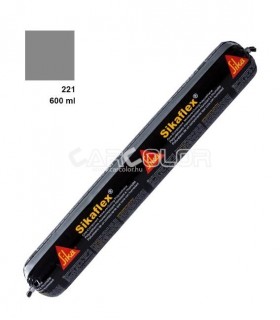
&media=https://www.carcolor.hu/shop/8290-large_default/sikaflex-221-adhesive-sealantr-gray-600ml.jpg)

&media=https://www.carcolor.hu/shop/6470-large_default/sikaflex-221-adhesive-sealantr-black-600ml.jpg)
&media=https://www.carcolor.hu/shop/15639-large_default/impa-1531-1015-body-oc-lc-sound-deadener-protective-1kg.jpg)
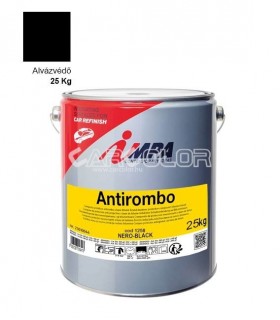
&media=https://www.carcolor.hu/shop/15744-large_default/impa-1258-antirombo-bitumen-based-sound-deadener-compound-25kg.jpg)
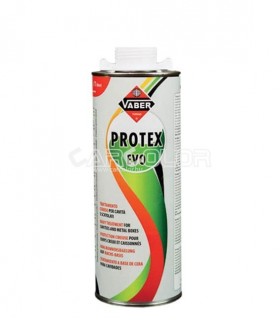
&media=https://www.carcolor.hu/shop/8269-large_default/vaber-protex-transparente-1l.jpg)