



In stock
24,765 Ft
(tax incl.)
Online price
3M polishing compounds for professional paint correction, scratch removal and high-gloss finishing. Choose from 3M Perfect-It heavy-cut, fine and anti-hologram compounds for different polishing stages.
The 3M Perfect-It professional polishing system is built around compounds and polishing pads designed to work together. It allows you to choose the right level of cutting power and finishing performance for different paint defects and polishing stages.
3M's colour-coded system makes it easier to match the correct compound with the appropriate polishing pad. From stronger correction to final finishing, you can select the right combination for the surface and result you want to achieve.
3M heavy-cut compounds are designed for sanding marks, heavier scratches, oxidation and more severe paint defects. They are typically used as the first correction stage when stronger cutting performance is required.
Finer 3M polishing compounds are used to refine the surface after heavier correction, remove smaller remaining marks and improve gloss.
3M finishing compounds are designed to remove micro-scratches, holograms and fine machine-polishing marks. On dark and black paintwork, a proper finishing stage is especially important for achieving a clean, high-gloss surface.
Some 3M polishing products can provide both correction and high gloss in a single working stage. They can be a practical choice when you want a faster process and the condition of the paint does not require a complete multi-stage correction.
One of the advantages of the 3M system is that compounds can be paired with suitable polishing pads. Choosing the correct compound and pad combination helps you achieve the required cutting power, gives you better control during polishing and can reduce unnecessary working stages.
When selecting a combination, always consider the condition of the clear coat, the type of polishing machine you are using and the manufacturer's recommendations for the specific 3M product.
The 3M polishing system offers solutions for both freshly refinished and older, weathered paintwork. On fresh paint, always follow the curing time specified by the paint or clear coat manufacturer before polishing, then choose a 3M compound that matches the sanding and refinishing process used.
On older paintwork, the required level of correction depends on scratches, oxidation, dullness and holograms. A full multi-stage process is not always necessary; lighter defects may only require a finer compound or a one-step solution.
If you are not looking exclusively for 3M products, browse our full range of professional polishing compounds from Rupes, Farécla, Indasa and other manufacturers.
For deeper scratches and sanding marks that can still be safely corrected, you will generally need a stronger-cutting 3M Fast Cut or Heavy Cut compound. Lighter defects and wash marks may only require a finer product. Choose the compound according to the condition of the clear coat and the finish you want to achieve.
For multi-stage correction, start with the compound that provides the required cutting power, then move to a finer polishing product. If necessary, finish with an anti-hologram or finishing stage. Not every paint surface requires every step, so adapt the process to the condition of the vehicle.
The 3M colour-coded system helps you match compounds with polishing pads for different polishing stages. Exact colour coding and product combinations can vary between product ranges, so always follow the instructions for the specific 3M product you are using.
Yes. Several 3M polishing compounds can be used with dual-action polishers. Choose the compound and pad according to the manufacturer's recommendations, the machine type and the condition of the paintwork.
Several products in the 3M system can be used on freshly refinished paint, but only after the curing time specified by the paint or clear coat manufacturer. Always match the sanding grade and polishing system to the refinishing process and the instructions for the specific 3M product.
Holograms and micro-scratches are especially visible on black and other dark paintwork. After the required correction stage, a fine 3M finishing or anti-hologram compound with a suitable soft polishing pad can help you achieve a cleaner, high-gloss finish.
Please sign in first.
Sign inCreate a free account to save loved items.
Sign inCreate a free account to use wishlists.
Sign in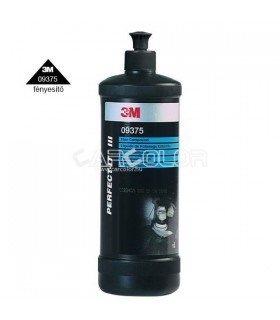


 English
 Magyar
&media=https://www.carcolor.hu/shop/7890-large_default/3mtm-perfect-ittm-lll-fast-cut-compound-1l.jpg)
 (1l)&media=https://www.carcolor.hu/shop/7891-large_default/3mtm-perfect-ittm-fine-compound-09375-1l.jpg)
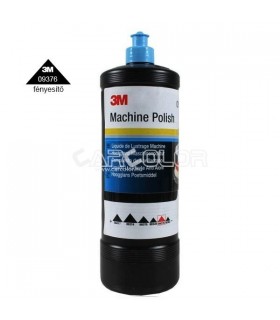
 (1l)&media=https://www.carcolor.hu/shop/7895-large_default/3mtm-perfect-ittm-machine-polish-compound-09376-1l.jpg)
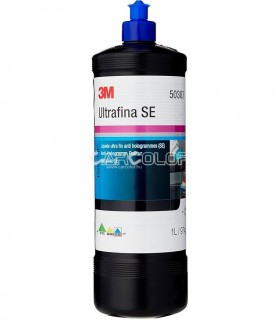
&media=https://www.carcolor.hu/shop/17141-large_default/3mtm-perfect-it-iii-ultrafina-se-50383-1l.jpg)

&media=https://www.carcolor.hu/shop/3002-large_default/3mtm-polish-rosa-wax-80345-1l.jpg)
&media=https://www.carcolor.hu/shop/3004-large_default/3mtm-perfect-it-iii-extra-fine-compound-80349-1l.jpg)
 + 2X 3M POLISHING PADS (150 MM)&media=https://www.carcolor.hu/shop/6784-large_default/3m-extra-fine-plus-fast-cut-plus-2-x-1000-gr-2x-3m-polishing-pads-150-mm.jpg)
&media=https://www.carcolor.hu/shop/6624-large_default/3m-polishing-compound-51815-with-green-cap-1kg.jpg)
&media=https://www.carcolor.hu/shop/7137-large_default/3mtm-51677-perfect-ittm-iii-famous-finish-compound-1kg.jpg)