

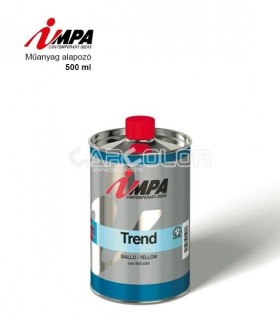

In stock
6,223 Ft
(tax incl.)
Online price
Plastic Primers – Achieving perfect adhesion
For painting plastic surfaces, a high-quality adhesion-promoting layer is essential to ensure proper paint bonding. Plastic primers prevent cracking, peeling, and ensure long-term resistance against external factors. They are particularly recommended for automotive, industrial, and household applications where painting plastic is a crucial step.
Due to the unique structure of plastic surfaces, coating them with regular paint can be challenging. A high-quality adhesion promoter helps solve this issue, ensuring an even and durable coating. The right primer selection is key to withstanding weather conditions, mechanical impacts, and other environmental factors.
Why is a plastic primer necessary?
Paint often does not adhere well when applied directly to plastic, leading to peeling, spotting, and an uneven surface. A specialized primer—also known as an adhesion-promoting layer—ensures the coating remains even and long-lasting.
Benefits of Plastic Primers:
Choosing the Right Primer
Different primers exist for various applications. Here are the main types:
When choosing the right product, consider the surface type, painting method, and environmental conditions the surface will be exposed to.
Which Types of Plastic Can It Be Applied To?
Plastic primers are widely used on different plastic surfaces, as these materials have varying structural and chemical properties. Some plastics adhere better, while others require extra preparation for proper priming and painting. Here are the most common plastic types and their characteristics!
• The plastic primers we offer are specifically designed for these plastic types to ensure optimal paint adhesion and long-lasting durability.
1️⃣. PP – Polypropylene
Polypropylene (PP) is one of the most commonly used plastics, favored for its lightweight and chemical resistance. It is widely used in automotive parts, packaging materials, and household appliances. Due to its low surface energy, a specialized primer is required for proper adhesion.
2️⃣. PE – Polyethylene
Polyethylene (PE) is highly flexible and durable, commonly found in pipes, containers, and packaging materials. Its smooth, low-adhesion surface makes it difficult to paint without priming. Applying an adhesion promoter ensures lasting coating adhesion.
3️⃣. PP/EPDM – Polypropylene/Modified Rubber
The combination of polypropylene and EPDM rubber provides excellent flexibility and impact resistance. This material is widely used in the automotive industry, such as in bumpers and body parts. Primers help establish and maintain strong paint adhesion.
4️⃣. PE/EPDM – Polyethylene/Modified Rubber
The polyethylene and EPDM blend enhances flexibility and durability. However, due to its low surface energy, specialized preparation and primer are needed to ensure proper paint adhesion.
5️⃣. ABS – Acrylonitrile Butadiene Styrene
ABS is a tough, impact-resistant plastic often used in automotive and electronic components. With its better adhesion properties, it is easier to paint, but a quality plastic primer ensures long-lasting protection and uniform paint bonding.
How to Apply Plastic Primer?
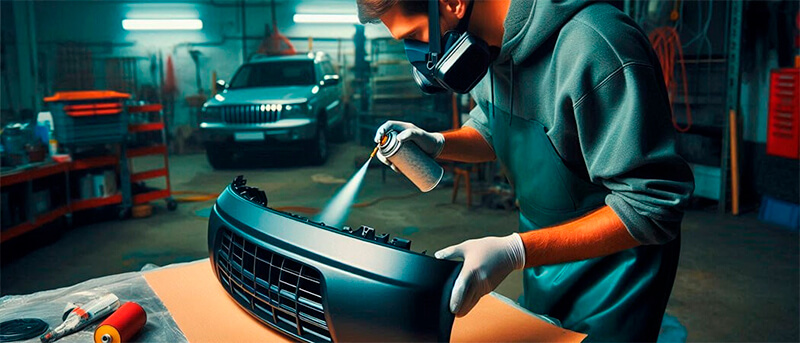
Proper priming is a crucial step in any painting process, especially for delicate surfaces like plastic. Follow these steps for a flawless result:
Key Factors for Successful Priming
• Shake the can for 2-3 minutes to mix the components properly, then apply it evenly in a thin layer. Proper priming ensures that the topcoat adheres firmly and does not peel off.
• For the best results, apply multiple thin layers rather than one thick coat. This method provides better adhesion and a smoother finish.
Our online store offers a wide range of plastic primers that ensure excellent adhesion and long-lasting durability. Whether for automotive, industrial, or home improvement applications, you will find the ideal product with us.
Please sign in first.
Sign inCreate a free account to save loved items.
Sign inCreate a free account to use wishlists.
Sign in



 English
 Magyar
&media=https://www.carcolor.hu/shop/9001-large_default/impa-1540-trend-preparatory-product-for-plastic-parts-05l.jpg)
&media=https://www.carcolor.hu/shop/6579-large_default/1k-plastic-primer-125l.jpg)
&media=https://www.carcolor.hu/shop/15469-large_default/impa-1501-bumper-paint-textured-paint-for-bumpers-and-plastic-1l.jpg)
&media=https://www.carcolor.hu/shop/15472-large_default/impa-1501-bumper-paint-textured-paint-for-bumpers-and-plastic-1l.jpg)
&media=https://www.carcolor.hu/shop/6338-large_default/spralac-sp-5399-1k-plastic-primer-1l.jpg)