



In stock
4,445 Ft
(tax incl.)
Online price
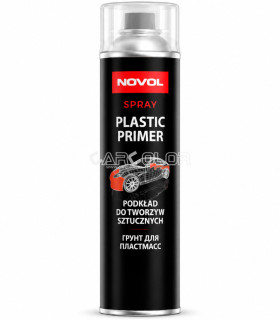
Plastic primer sprays and adhesion promoters for preparing bumpers, mirror housings, trim and other compatible plastic vehicle components before refinishing. They help create a suitable adhesion layer for subsequent primer or paint coats.
Different plastic types may require different preparation, so always confirm that the selected plastic primer aerosol is compatible with the actual substrate.
Plastic primer spray, also known as plastic adhesion promoter, is designed to create a suitable adhesion layer between compatible plastic substrates and subsequent primer or paint coatings.
In automotive refinishing it is commonly used when preparing bumpers, mirror housings, trim, covers and other plastic vehicle components for repair or repainting.
Plastic primer is normally not a high-build surfacer. Its primary purpose is adhesion, so it should not be confused with a sandable filler primer.
Many plastics have relatively low surface energy and can be more difficult to coat than correctly prepared metal. Without a suitable coating system, poor adhesion can result in peeling, flaking or separation between layers.
A suitable plastic adhesion promoter creates a thin functional layer between the plastic and the subsequent coating to improve adhesion.
Not every plastic and not every paint system requires the same primer, so the substrate type and manufacturer's technical instructions should always take priority over general rules.
Depending on the individual product, suitable applications can include:
Always check the technical data sheet for approved substrates.
Automotive components can be manufactured from materials such as PP, PP/EPDM, PE, ABS, PA, PC, PUR and various composite plastics.
A plastic primer is not automatically compatible with every plastic type. Some products are approved for a wide range of substrates, while others exclude certain materials such as particular PE, PC or other plastics.
Where possible, identify the substrate before choosing the primer. Material codes are often moulded into the reverse or inside of automotive plastic components.
In practice, the terms are often used for the same type of product. A plastic adhesion promoter is usually a thin specialist primer whose primary function is to improve adhesion of subsequent coatings.
It is not generally designed to build film thickness or fill sanding scratches.
Where additional surface refinement is required, a compatible primer surfacer may be applied after the adhesion promoter if the coating system allows it.
Correct cleaning is particularly important with plastic components because mould-release agents, silicone, grease, wax and other contamination may remain on the surface.
Preparation can include:
Do not automatically use aggressive solvents on every plastic, as some materials can be damaged or attacked by unsuitable cleaners.
Spray distance, number of coats and drying time vary between products.
Many plastic adhesion promoters do not require sanding. They are applied as a thin layer and recoated after the specified flash-off time.
This is not a universal rule, however, so always follow the technical procedure for the individual product.
Applying excessive film thickness or unnecessarily sanding an adhesion promoter can interfere with the intended coating system.
Repairing damaged plastic components can require several different products.
Where approved by the coating manufacturers, a typical sequence may include:
The exact sequence should always follow the technical requirements of the selected coating system.
New raw plastic components can contain mould-release contamination and may require particularly thorough cleaning or specialist preparation.
On previously painted plastics, first confirm that the existing coating is sound and firmly adhered. Loose or peeling paint should be removed before refinishing.
A separate plastic adhesion promoter may not always be required over a sound existing coating. It is particularly relevant where raw plastic has been exposed or where the coating manufacturer specifies its use.
Plastic primer alone does not guarantee a successful bumper repair. The substrate must be clean, stable and correctly prepared.
Deep scratches or physical damage should first be repaired with suitable plastic-repair materials. Adhesion promoter is not a filler and cannot replace plastic body filler.
Plastic primers can be clear or pigmented. A pigmented product can make it easier to see where the primer has been applied, while a clear product has less influence on the appearance of the substrate.
Colour alone does not determine compatibility or adhesion performance; always select the primer according to its technical specification.
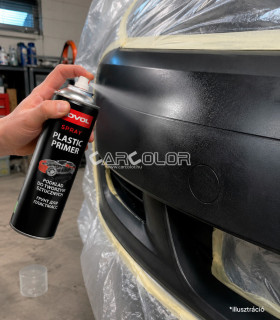
Aerosol application is particularly practical for smaller components and localised repairs. It avoids the need to prepare and clean a separate spray gun while allowing the adhesion promoter to be applied directly to the prepared substrate.
The category contains plastic-primer systems from several manufacturers with different substrate approvals. Some are designed specifically for particular plastics, while other more versatile primers may be approved for several types of substrate.
Use plastic primer aerosols only in the working environment specified by the manufacturer. Provide appropriate ventilation and use the respiratory, eye and skin protection required by the label and safety data sheet.
Its primary purpose is to improve adhesion of subsequent primer or paint coats to compatible plastic substrates. It is not a filler and does not replace materials used to repair scratches or larger surface defects.
A suitable adhesion promoter is commonly required on raw plastic, but the exact requirement depends on the plastic type and the selected coating system.
No. Some primers are approved for many automotive plastics while others exclude specific materials. Always check the approved substrates in the technical data sheet.
Many plastic adhesion promoters do not require sanding and can be recoated after the specified flash-off period. Always follow the instructions for the individual product.
Yes, where the adhesion promoter, primer surfacer and complete coating system are compatible. Follow the manufacturer's approved coating sequence.
Not necessarily. A sound existing coating may require different preparation, while exposed raw plastic often requires a suitable adhesion promoter. Follow the requirements of the selected refinishing system.
Plastic primer primarily promotes adhesion between plastic and subsequent coatings. Filler primer provides greater film build and is designed to refine minor sanding marks and surface irregularities before painting.
Please sign in first.
Sign inCreate a free account to save loved items.
Sign inCreate a free account to use wishlists.
Sign in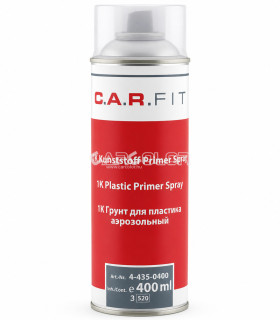


 English
 Magyar

&media=https://www.carcolor.hu/shop/17806-large_default/1k-plastic-primer-spray-400-ml.jpg)
&media=https://www.carcolor.hu/shop/15442-large_default/2001-universal-primer-spray-400ml.jpg)
&media=https://www.carcolor.hu/shop/13350-large_default/ppg-d8420-deltron-plastic-adhesion-promoter-aerosol-400-ml.jpg)
&media=https://www.carcolor.hu/shop/17795-large_default/novol-plastic-primer-adhesion-promoter-spray-500ml.jpg)