





Last items in stock
11,494 Ft
(tax incl.)
Online price
Professional polishing compound for cars, paintwork and headlights, safe for both beginners and professional users with dual-action, rotary machines or hand polishing. Whether you need to remove deep scratches and sanding marks, revive dull and oxidised clear coat, eliminate holograms or achieve a final mirror finish, we have the right solution. Our range includes every type of effective car polishing compound: from aggressive cutting compounds to medium polishes and ultra-fine finishing polish for one-step or multi-step systems. Choose from our premium products in stock and restore the original gloss and depth of your vehicle’s paintwork – whether you work in a home garage or a professional bodyshop.
The secret to a flawless, mirror-like finish lies in choosing the right polishing compound. A well-selected car polishing compound not only makes the clear coat look dramatically better, it also helps preserve the long-term value of your vehicle. Different compounds are needed for deep scratches, wash marring, holograms, dull and oxidised paint or light gloss enhancement. Below we explain the main types, so you can decide more easily which polishing compound for cars best suits the condition of your paintwork and your goals.
Polishing compounds are primarily classified by their cutting power and gloss level. This is also how you should plan your complete car polishing process:
To achieve a professional, hologram-free finish, choosing a good car polishing compound is only half the story – correct technique is just as important. Dual-action machines, rotary polishers and hand polishing all require slightly different speeds, pressure and movement. Always take into account the hardness of the clear coat, the type of pad and the heat you generate, because all of these influence how the abrasives break down and how much correction you can safely achieve.
Explore our wide range of polishing compounds and materials, and choose the products that best match your needs, machine type and the actual condition of your car’s paintwork. If you are unsure, our customer service is happy to help with practical advice and specific recommendations.
There is no single “best” car polishing compound – the ideal choice depends on the depth of the defects, the hardness of the clear coat and the result you want. Deep scratches, heavy wash marring and sanding marks usually require a heavy cut compound. For fine scratches, swirl marks and refining, a finishing polish is recommended. Modern one-step compounds are an excellent compromise, because they can correct moderate defects and boost gloss in a single step, making them ideal for quick but impressive paint rejuvenation.
While the most consistent and efficient results come from machine polishing, many polishing compounds can also be applied by hand. Hand application is particularly useful on small areas such as behind door handles, tight edges or for localised defects. For a full car polish, however, a dual-action or rotary machine is strongly recommended, because it ensures even pressure, controlled heat and proper activation of the abrasives. Most professional compounds are suitable for both methods – the main difference lies in the achievable correction level and working speed.
This is one of the most common misunderstandings: polishing compound and wax have completely different functions. A polishing compound contains abrasives and physically levels the top layer of the clear coat, giving real defect removal and paint correction. Wax or ceramic coating, on the other hand, does not correct the paint; instead, it adds a protective layer on top of the already corrected surface, improving water beading, gloss and durability. The correct order is therefore always: polishing compound first (correction), then wax or coating (protection and preservation).
Yes. Most quality car polishing compounds are suitable for restoring dull plastic headlights when used with the proper preparation. Typically, you first sand the lens with progressively finer grits (for example P800–P2000), then polish it back to clarity with a heavy cut and then a fine polish. For long-lasting results it is essential to protect the lens at the end with an UV-resistant clear coat or coating, otherwise the plastic will quickly turn cloudy again under UV exposure.
In professional detailing, the colour of the compound itself is practically irrelevant, because you are working the clear coat, which is transparent, not the colour coat. Polishing black cars only feels more difficult because every tiny defect, hologram and micro-scratch is more visible on dark, high-gloss finishes. On dark colours, an extra refining step with a dedicated anti-hologram finishing polish is especially important to remove machine trails and achieve a truly mirror-like finish.
A polishing compound can only fully remove defects that are still within the thickness of the clear coat. A simple test: if your fingernail clearly catches in the scratch, it is most likely too deep to correct perfectly by polishing alone. In such cases you usually need touch-up paint or a colour-matched repair pen, and the polishing compound can only soften and disguise the damage instead of making it disappear completely. When in doubt, always perform a test on a less visible area first.
Surprisingly little. For a typical passenger car with a multi-step process you usually need around 4–8 pea-sized drops per panel and per step, depending on the compound and pad. If the product is splattering or leaving heavy, greasy residue, you are probably using too much – this reduces cutting power, causes the pad to “float”, and makes wipe-off more difficult. A 250 ml bottle is generally enough for 1–2 full cars, depending on the number of steps, pad type and how efficiently you work.
A silicone-free polishing compound is essential in bodyshops, because silicone can cause craters and adhesion problems in fresh paint. For enthusiasts and home users, this label also means that the product delivers true, long-lasting correction instead of temporarily hiding defects with oily, silicone-rich fillers. With silicone-free polishing compound, the finish still looks good after washing, and you get an honest picture of the real condition of the paint, making it safe to apply wax, sealant or ceramic coating afterwards.
Please sign in first.
Sign inCreate a free account to save loved items.
Sign inCreate a free account to use wishlists.
Sign in










 English
 Magyar
&media=https://www.carcolor.hu/shop/6493-large_default/4cr-cleaning-matting-paste-green-1kg.jpg)

&media=https://www.carcolor.hu/shop/7890-large_default/3mtm-perfect-ittm-lll-fast-cut-compound-1l.jpg)

 (1l)&media=https://www.carcolor.hu/shop/7891-large_default/3mtm-perfect-ittm-fine-compound-09375-1l.jpg)
&media=https://www.carcolor.hu/shop/2942-large_default/indasa-autogloss-compound-plus-1l.jpg)
&media=https://www.carcolor.hu/shop/2835-large_default/corcos-matt-gel-1000ml.jpg)
&media=https://www.carcolor.hu/shop/8271-large_default/farecla-g3-fine-cut-liquid-compound-250ml.jpg)
 (1l)&media=https://www.carcolor.hu/shop/7895-large_default/3mtm-perfect-ittm-machine-polish-compound-09376-1l.jpg)
&media=https://www.carcolor.hu/shop/2943-large_default/indasa-autogloss-high-gloss-plus-wax-1l.jpg)
&media=https://www.carcolor.hu/shop/16896-large_default/farecla-g3premium-liquid-compound-500gr.jpg)
&media=https://www.carcolor.hu/shop/6484-large_default/indasa-autogloss-compound-plus-foam-pad-1l.jpg)
&media=https://www.carcolor.hu/shop/17141-large_default/3mtm-perfect-it-iii-ultrafina-se-50383-1l.jpg)
&media=https://www.carcolor.hu/shop/6203-large_default/rupes-uno-protect-one-step-polish-and-sealant-1000-ml.jpg)
&media=https://www.carcolor.hu/shop/5818-large_default/farecla-farecla-profile-select-1000ml.jpg)

&media=https://www.carcolor.hu/shop/16817-large_default/rupes-rotary-polishing-set-150mm.jpg)
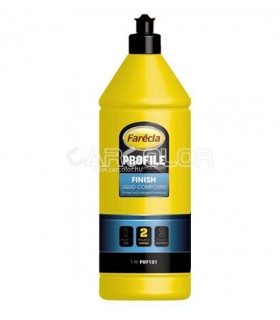
&media=https://www.carcolor.hu/shop/5819-large_default/farecla-profile-finish-prf101-1000ml.jpg)


&media=https://www.carcolor.hu/shop/6837-large_default/farecla-g10-premium-liquid-finishing-compound-500ml.jpg)
