



In stock
4,318 Ft
(tax incl.)
Online price
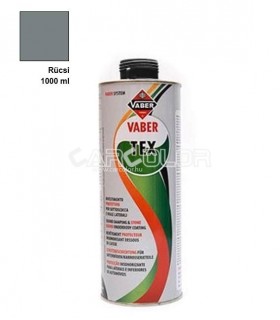
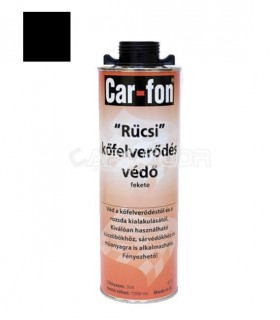
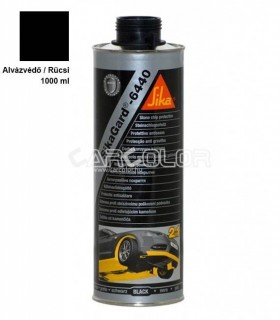
Stone-chip protection coatings for sills, wheel arches and lower body panels exposed to road debris and mechanical wear. Spray-gun-applied textured coatings in black, grey and white for automotive body repair and refinishing.
Select the correct coating according to substrate, required texture and whether the surface needs to be overpainted.
Stone-chip protection is a flexible or textured automotive coating designed primarily for body surfaces exposed to road debris and mechanical impact.
Typical applications include sills, wheel arches, lower door sections, valances and other suitable lower body panels.
Different stone-chip coatings can vary in chemistry, texture, flexibility, overpaintability and approved substrates, so always select the system according to the repair requirement.
Always confirm substrate compatibility in the individual technical data sheet.
These product groups can overlap, but they are not identical.
Stone-chip protection primarily provides a flexible, often textured barrier against road debris, while underbody protection is a broader category covering several coating technologies for corrosion and environmental protection of the vehicle underside.
Many stone-chip coatings are designed to be overpainted with compatible automotive refinishing systems once correctly dried.
Overpaintability is product-specific. Always observe the specified recoat time and compatible topcoat system.
The current range includes black, grey and white products. Colour can help when matching the coating to the final refinishing system, but technical suitability should always be the primary selection criterion.
The final texture can be influenced by the product and application technique, including spray-gun setup, air pressure, spray distance and applied film thickness.
A test spray is recommended when trying to reproduce an existing factory-style texture.
Many 1 kg or 1 litre stone-chip coatings are designed for application with a suitable UBS or undercoating gun.
Air pressure and application settings vary by product, so always follow the manufacturer's technical instructions.
Approved substrates vary between products and can include correctly prepared primed metal, stable existing coatings and other manufacturer-approved surfaces.
Do not assume that every stone-chip coating can be applied directly to bare metal, plastic or PVC.
Loose or active corrosion should not simply be covered. Remove unstable rust and coatings first, then prepare and prime the substrate where required by the selected refinishing system.
Some flexible stone-chip coatings can also provide sound- or vibration-damping properties due to their film thickness and elasticity.
This is product-specific and does not replace materials specifically designed for acoustic insulation.
Always follow the product label, technical data sheet and safety data sheet. Provide appropriate ventilation and use the specified respiratory, eye and skin protection.
It is a flexible or textured automotive coating designed to protect suitable body surfaces against road debris and mechanical impact.
Stone-chip coating primarily protects against mechanical impact and often creates a textured finish, while underbody protection is a broader category covering corrosion and environmental protection of lower vehicle surfaces.
Many products can be overpainted, but not all. Always check the specified recoat time and compatible paint system for the individual coating.
The current range includes black, grey and white stone-chip coatings.
Many bulk stone-chip coatings are applied using a suitable UBS or undercoating gun. Exact equipment and air pressure depend on the individual product.
No general recommendation supports simply covering active or loose corrosion. Remove or correctly treat corrosion and prepare the substrate before coating.
Yes, where the product specification permits it. Sills are one of the common applications for automotive stone-chip protection.
Please sign in first.
Sign inCreate a free account to save loved items.
Sign inCreate a free account to use wishlists.
Sign in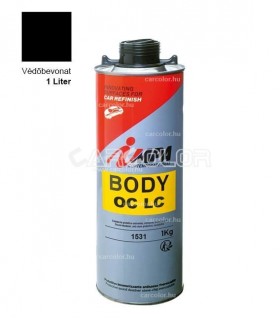





 English
 Magyar
&media=https://www.carcolor.hu/shop/15645-large_default/impa-1531-3082-body-oc-lc-sound-deadener-protective-1kg.jpg)
&media=https://www.carcolor.hu/shop/15642-large_default/impa-1531-3012-body-oc-lc-sound-deadener-protective-1kg.jpg)
&media=https://www.carcolor.hu/shop/15639-large_default/impa-1531-1015-body-oc-lc-sound-deadener-protective-1kg.jpg)
&media=https://www.carcolor.hu/shop/9820-large_default/vaber-tex-defender-black-1000ml.jpg)
&media=https://www.carcolor.hu/shop/9832-large_default/vaber-tex-defender-gray-1000ml.jpg)
&media=https://www.carcolor.hu/shop/9826-large_default/vaber-tex-defender-white-1000ml.jpg)
&media=https://www.carcolor.hu/shop/8150-large_default/defender-black-1000ml.jpg)
&media=https://www.carcolor.hu/shop/16637-large_default/sika-defender-black-1000ml.jpg)
&media=https://www.carcolor.hu/shop/17240-large_default/car-fit-sound-deadener-protective-black-1kg.jpg)
&media=https://www.carcolor.hu/shop/17242-large_default/car-fit-sound-deadener-protective-gray-1kg.jpg)