



In stock
3,509 Ft
(tax incl.)
4,128 Ft
Online price
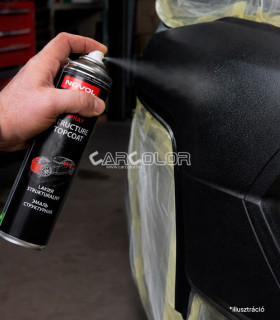
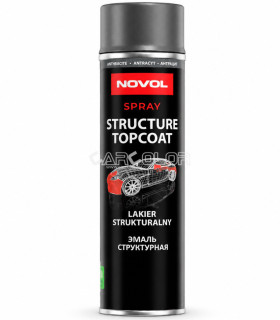
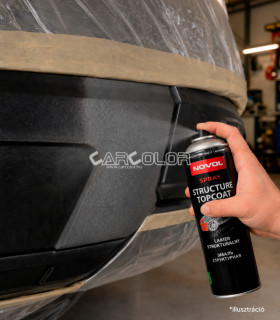
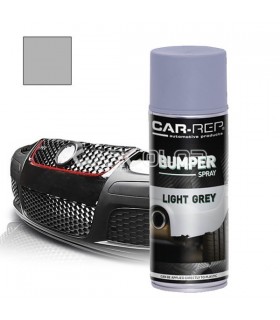
Bumper paint sprays for restoring black, grey and textured automotive plastics. Suitable products for bumpers, spoilers, mirror housings, trim and other compatible plastic vehicle components.
Need to paint the bumper in the vehicle's body colour? Choose a paint-code-matched automotive aerosol instead. Raw plastic may also require a suitable plastic adhesion promoter depending on the coating system.
Bumper paint spray is designed for the cosmetic restoration of suitable plastic bumpers and other automotive plastic components. Depending on the product, it can restore faded black or grey plastics or reproduce a textured plastic-style finish.
Select the product according to the substrate, existing condition and required finish, rather than colour alone.
This category is primarily intended for black, grey, anthracite or textured plastic parts where the original plastic appearance needs to be restored.
Typical applications can include bumpers, spoilers, mirror housings, plastic trim, sill covers and other compatible automotive plastic parts.
If the bumper is painted in the same colour as the vehicle body – such as metallic silver, pearl white, blue or red – a black or grey bumper coating is normally not the correct product.
Use automotive paint mixed according to the vehicle's factory paint-code formula. Depending on the substrate and colour system, the complete process may also require plastic adhesion promoter, primer and clear coat.
Bumper paint and plastic primer perform different functions.
Plastic primer or adhesion promoter primarily improves adhesion of subsequent coatings to compatible raw plastic. Bumper paint forms the visible finishing layer.
Some specialist bumper coatings are approved for direct application to certain plastics, while other systems require a separate adhesion promoter first.
Many unpainted plastic bumpers and trim pieces have a fine textured rather than completely smooth surface.
Textured bumper paint can recreate a plastic-like grain when applied correctly and is useful when refinishing repaired textured parts.
Texture can be influenced by the individual coating, spray distance, film build and application technique, so a test spray is recommended.
A faded but otherwise sound plastic component can often be cosmetically restored with a suitable plastic coating.
Thorough cleaning and preparation are essential because silicone, wax, dressing products, grease and other contamination can severely reduce paint adhesion.
Paint does not repair deep scratches, cracks, deformation or missing plastic.
Depending on the damage, correct preparation may require sanding, plastic repair materials, suitable filler, adhesion promoter and primer before the finishing coat is applied.
Use aerosol coatings according to the individual product label, technical data sheet and safety data sheet. Provide appropriate ventilation and use the specified respiratory, eye and skin protection.
It is used to cosmetically restore suitable black, grey, anthracite or textured plastic bumpers and other automotive plastic components.
If the bumper needs to match the vehicle's body colour, use automotive paint mixed according to the factory paint-code formula rather than a generic black or grey bumper coating.
It depends on the product and substrate. Some coatings are approved for direct application to certain plastics, while other systems require a suitable adhesion promoter.
No. Plastic compatibility varies by product, so always check the approved substrates in the technical information.
Yes, a sound faded plastic surface can often be refinished with an appropriate coating after correct cleaning and preparation.
No. Deep scratches, cracks and deformation require proper plastic repair before the finishing coat is applied.
It is a coating designed to create a fine plastic-like texture, making it useful for refinishing repaired or worn textured plastic components.
Please sign in first.
Sign inCreate a free account to save loved items.
Sign inCreate a free account to use wishlists.
Sign in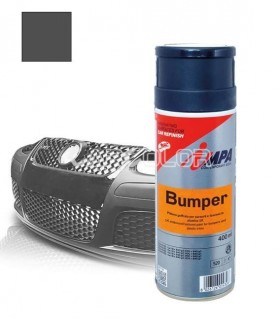




 English
 Magyar
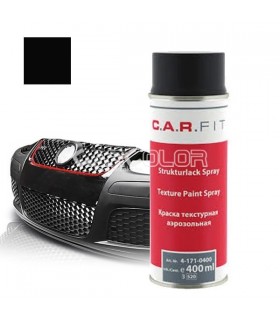
&media=https://www.carcolor.hu/shop/7435-large_default/texture-paint-spray-black-400-ml.jpg)
 Gray&media=https://www.carcolor.hu/shop/15448-large_default/impa-2002-textured-paint-for-bumpers-and-plastic-400ml-gray.jpg)
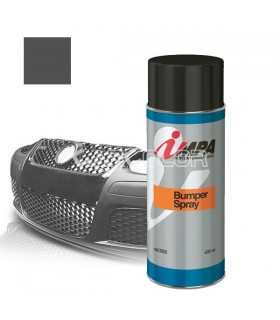
 Black&media=https://www.carcolor.hu/shop/15445-large_default/impa-2002-textured-paint-for-bumpers-and-plastic-400ml-black.jpg)
&media=https://www.carcolor.hu/shop/7440-large_default/dinitrol-820-plastic-lack-black.jpg)
&media=https://www.carcolor.hu/shop/7438-large_default/dinitrol-8020-styling-lack-gray.jpg)
&media=https://www.carcolor.hu/shop/7439-large_default/dinitrol-8020-styling-lack-black.jpg)
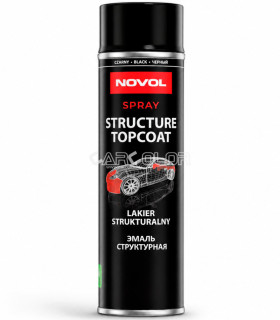
&media=https://www.carcolor.hu/shop/17800-large_default/novol-structure-topcoat-acrylic-spray-black-500ml.jpg)
&media=https://www.carcolor.hu/shop/17804-large_default/novol-structure-topcoat-acrylic-spray-anthracite-500ml.jpg)
&media=https://www.carcolor.hu/shop/7434-large_default/car-rep-bumper-spray-anthracit-grey-400ml.jpg)
&media=https://www.carcolor.hu/shop/13017-large_default/car-rep-bumper-spray-white-400ml.jpg)
&media=https://www.carcolor.hu/shop/13026-large_default/car-rep-bumper-spray-lightgrey-400ml.jpg)