Automotive Clear Coat Spray
Clear coat spray provides a transparent finishing layer over compatible paint systems. Depending on the individual product, it can create the required gloss or matt appearance while improving the surface protection of the colour coat.
Aerosol clear coats are particularly convenient for smaller refinishing repairs, components, spot repairs and jobs where using a separate spray gun and compressor would be unnecessary.
The range includes 1K and 2K automotive clear coat sprays in gloss and matt finishes. Performance and approved applications vary between products.
What Is Clear Coat Spray Used For?
Depending on the coating system, clear coat can be used to:
- seal compatible automotive basecoats,
- create a gloss or matt final finish,
- increase surface protection of the colour coat,
- improve UV and weather resistance with suitable products,
- complete local paint repairs,
- refinish compatible vehicle components.
UV, scratch, fuel and chemical resistance vary significantly between products, so always check the technical specification of the selected clear coat.
1K Clear Coat Spray
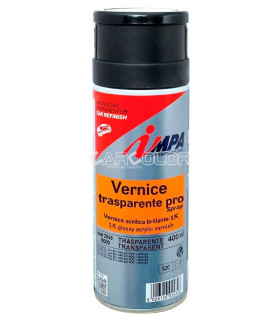
1K clear coat spray is a single-component, ready-to-use aerosol. There is no separate hardener to activate, making it convenient for suitable smaller repairs and refinishing work.
1K clear coats can vary considerably in gloss, flow, drying behaviour and resistance. The term 1K alone does not define the quality or performance of the coating.
2K Clear Coat Spray
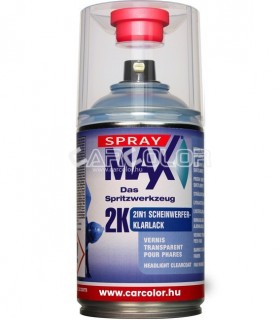
A 2K clear coat spray is a genuine two-component aerosol system containing a separate hardener component that is activated before use.
After activation, chemical curing begins and the usable working life of the aerosol becomes limited.
Depending on the product, 2K clear coats can provide higher mechanical, chemical, scratch and weather resistance than simpler single-component systems.
Performance remains product-specific, so do not assume that every 2K clear coat has identical properties.
1K or 2K Clear Coat?
- 1K clear coat: convenient for suitable smaller repairs, retouching and less demanding applications.
- 2K clear coat: useful where the selected two-component system's higher mechanical or chemical resistance is required.
The clear coat must also be compatible with the basecoat and the complete refinishing system.
Gloss Clear Coat Spray
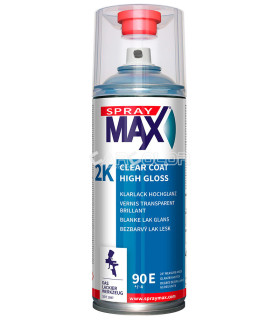
Gloss clear coat spray creates a transparent high-gloss finishing layer over compatible paint systems.
Final gloss depends not only on the product but also on film thickness, spray technique, temperature, spray distance and flash-off times.
Matt Clear Coat Spray
Matt clear coat spray creates a transparent finish with reduced gloss.
Consistent application is particularly important with matt coatings because differences in film thickness and application can produce visible variations in gloss level.
A test application is recommended before coating the final surface.
Clear Coat over Metallic & Pearl Basecoat
Most modern metallic and pearl automotive colours are basecoat systems that require a compatible clear coat as part of the complete coating process.
The basecoat provides the colour and effect, while the clear coat creates the finished surface and provides the required outer protection.
Apply clear coat only after the specified basecoat flash-off period and according to the paint-system manufacturer's instructions.
Does Acrylic Automotive Paint Need Clear Coat?
Not every acrylic paint system requires a clear coat.
Some 2K acrylic topcoats are designed as complete final coatings, while other systems may allow or require a clear coat. Always follow the coating manufacturer's specified system.
Which Surfaces Can Clear Coat Spray Be Used On?
Approved substrates vary between products. Automotive clear coats may be suitable over compatible basecoats, correctly prepared existing finishes and other coatings specifically approved by the manufacturer.
Do not assume that an automotive clear coat is automatically suitable for every type of plastic, wood, bare metal or unrelated paint system.
Preparation Before Clear Coating
Preparation depends on whether the clear coat is being applied over fresh basecoat or an existing cured coating.
Fresh basecoat should normally be clear-coated after the specified flash-off time without automatically sanding the colour layer.
Existing cured coatings may require cleaning, degreasing and suitable sanding or scuffing to provide adhesion.
These two situations should not be treated as the same process.
How to Apply Clear Coat Spray
- Confirm compatibility with the underlying paint.
- Prepare the surface according to the coating system.
- Shake the aerosol thoroughly.
- Activate the hardener on a 2K aerosol immediately before use.
- Carry out a test spray.
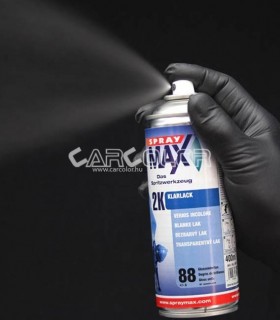
- Maintain the specified spray distance and use controlled overlapping passes.
- Apply the specified coats with the correct flash-off time.
- Allow the coating to cure fully before handling, assembly or polishing.
Coat count, film thickness, spray distance and drying time are product-specific.
How Many Coats of Clear Coat Spray?
There is no universal number of coats for every clear coat. A 1K aerosol and a 2K HS clear coat can require very different film builds and application procedures.
Follow the manufacturer's instructions rather than applying a fixed coat count to every product.
Can Clear Coat Spray Be Polished?
Many gloss automotive clear coats can be sanded and polished after full curing, but this is not true for every product.
Matt clear coats should generally not be conventionally polished because polishing can alter their gloss level.
Are All Clear Coats UV-, Fuel- & Chemical-Resistant?
No. Resistance varies considerably between clear coat formulations.
Some premium 2K automotive clear coats can provide high UV, fuel and chemical resistance, while simpler 1K products may be designed for less demanding applications.
Always check the technical specification where exposure to fuel, chemicals, strong sunlight or increased mechanical wear is expected.
Clear Coat Is Not an Anti-Corrosion Primer
Clear coat can form the outer protective layer of a suitable paint system, but it does not replace anti-corrosion primer.
Bare or corroded metal requires the appropriate corrosion treatment, primer and colour system before clear coat is applied where required.
Safe Use – Particularly with 2K Clear Coats
Always use aerosol clear coats according to their label, technical data sheet and safety data sheet.
2K clear coat systems may contain isocyanate hardeners and therefore require particular attention to the specified working environment, ventilation and respiratory, eye and skin protection.
Frequently Asked Questions About Clear Coat Sprays
What is clear coat spray used for?
It is used to seal compatible colour coats, create the required final gloss level and increase surface protection according to the properties of the individual clear coat.
What is the difference between 1K and 2K clear coat spray?
1K clear coat is single-component and ready to use. A 2K aerosol contains a separate hardener that is activated before use, after which chemical curing begins and working time becomes limited.
Does metallic automotive paint need clear coat?
Modern metallic basecoat systems require a compatible clear coat as part of the complete coating process.
Does acrylic automotive paint need clear coat?
Not always. Some acrylic topcoats are designed as complete final coatings, so follow the requirements of the specific paint system.
How many coats of clear coat spray should I apply?
There is no universal coat count. 1K, 2K and high-solids clear coats can require different film builds and application methods, so follow the individual product instructions.
Can clear coat spray be polished?
Many gloss automotive clear coats can be polished after suitable curing, but always check the individual product. Matt clear coats should generally not be conventionally polished because this can alter their gloss level.
Are all clear coat sprays UV- and fuel-resistant?
No. UV, fuel, chemical and scratch resistance vary by formulation. Check the technical specification when the coating will be exposed to demanding conditions.






 English
 Magyar
&media=https://www.carcolor.hu/shop/17829-large_default/impa-2016-vernice-transparente-spray-400ml.jpg)
&media=https://www.carcolor.hu/shop/17113-large_default/spraymax-rapid-two-2k-lacquer-gloss-250ml.jpg)
&media=https://www.carcolor.hu/shop/17895-large_default/spraymax-rapid-two-2k-lacquer-gloss-400ml.jpg)
&media=https://www.carcolor.hu/shop/12016-large_default/high-gloss-clear-coat-spray-400ml.jpg)
&media=https://www.carcolor.hu/shop/12025-large_default/maston-auto-clear-coat-spray-matt-500ml.jpg)
&media=https://www.carcolor.hu/shop/17121-large_default/spraymax-hs-2k-lacquer-gloss-400ml.jpg)
&media=https://www.carcolor.hu/shop/17125-large_default/spraymax-matt-2k-lacquer-matt-400ml.jpg)
&media=https://www.carcolor.hu/shop/17780-large_default/novol-high-gloss-clearcoat-500-ml.jpg)
&media=https://www.carcolor.hu/shop/12019-large_default/kent-final-clear-uv-resistant-1k-clear-450ml.jpg)
&media=https://www.carcolor.hu/shop/13152-large_default/clear-coat-spray-matt-400ml.jpg)