

Last items in stock
15,367 Ft
(tax incl.)
Online price
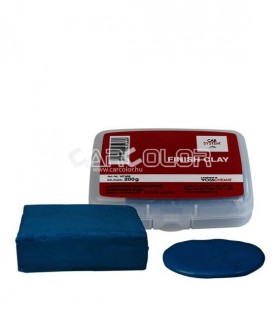
Clay bars for removing bonded contamination from automotive paint before polishing or protection. Ideal for paint overspray, industrial fallout, embedded particles and other stubborn surface contamination.
A clay bar is a mechanical decontamination product used to remove bonded contamination that normal washing may leave behind. This can include paint overspray, industrial fallout, embedded particles and other stubborn deposits attached to the paint surface.
After claying, the paint can feel noticeably smoother, which makes clay treatment a useful preparation step before polishing, waxing or applying other forms of paint protection.
A clay bar is particularly useful when the paint still feels rough after washing or when contamination remains attached to the surface despite normal cleaning.
It can be used for:
Paintwork should be as clean as possible before machine polishing. Hard contamination left on the surface can become trapped between the polishing pad and the paint, increasing the risk of unnecessary micro-marring.
Claying can therefore be an important preparation stage before polishing, especially on vehicles that have not been thoroughly decontaminated for a long period of time.
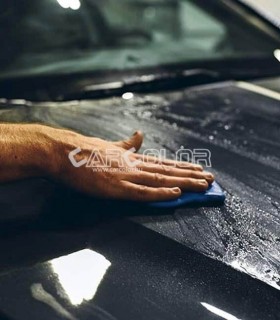
Wash the vehicle thoroughly first and remove all loose dirt. Use the clay bar with a suitable lubricant to reduce friction and minimise the risk of marking the surface.
Work on small sections using light pressure. As the clay becomes contaminated, fold or knead it to expose a clean surface before continuing.
Avoid excessive pressure and always follow the instructions provided for the specific clay product you are using.
Clay bars are available in different levels of aggressiveness. A finer clay is generally suitable for well-maintained paintwork, while a stronger clay may be more effective on heavier bonded contamination.
More aggressive clay can increase the chance of light surface marring, so a finishing polish may sometimes be required afterwards.
The two methods complement each other well. Chemical decontamination products can dissolve or loosen certain contaminants, such as iron fallout or tar, before mechanical treatment begins.
A clay bar can then remove contamination that remains bonded to the surface. Using the two methods in the correct order can make paint preparation more effective and reduce unnecessary mechanical abrasion.
A clay bar removes bonded contamination from the paint surface, including overspray, industrial fallout and other particles that remain after normal washing.
Improper use can cause light marring. Always work on a clean surface, use sufficient lubrication and apply only light pressure. More aggressive clay may require a finishing polish afterwards.
Yes. Most traditional clay bars require a suitable lubricant to reduce friction and help the clay move safely across the paint surface.
Yes, if the paint still feels rough or contaminated after washing. Claying removes bonded contamination that could interfere with the polishing process.
Some clay products can also be used on automotive glass. Check the manufacturer's instructions first and always use suitable lubrication.
Please sign in first.
Sign inCreate a free account to save loved items.
Sign inCreate a free account to use wishlists.
Sign in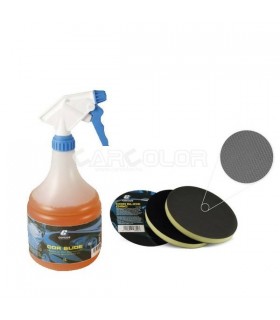

 English
 Magyar

&media=https://www.carcolor.hu/shop/6924-large_default/corcosr-co756-cor-slide-cleaning-liquid-1000ml.jpg)
