



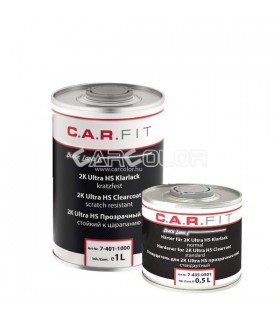

In stock
14,351 Ft
(tax incl.)
Online price

Orange peel paintwork is one of the most common automotive paint defects. In this case, the surface is not perfectly smooth and mirror-like, but shows a fine, uneven texture similar to the skin of an orange.
This issue can appear on freshly sprayed clear coat, base coat, touch-up spray repairs, or even after professional spray gun application. The cause is most often related to incorrect spraying technique, material viscosity, layer thickness, temperature, drying conditions, or spray gun settings.
In this article, we explain what causes orange peel in automotive paintwork, when it can be corrected by polishing, when wet sanding is needed, and when repainting is the only proper solution.
Orange peel paintwork occurs when the car’s surface is not evenly smooth, but shows small waves, dimples, and texture. The reflection of light is no longer clean and mirror-like, but slightly distorted, grainy, or textured.
It is important to note that orange peel is not the same as dusty paintwork, craters, runs, or a matte finish. Orange peel usually appears as a consistent texture on the surface of the clear coat or paint. In mild cases, it is only visible from certain angles, while in more severe cases it can be noticeable even from a distance.

Orange peel usually forms when the paint or clear coat cannot flow out properly on the surface. This can have several practical causes.
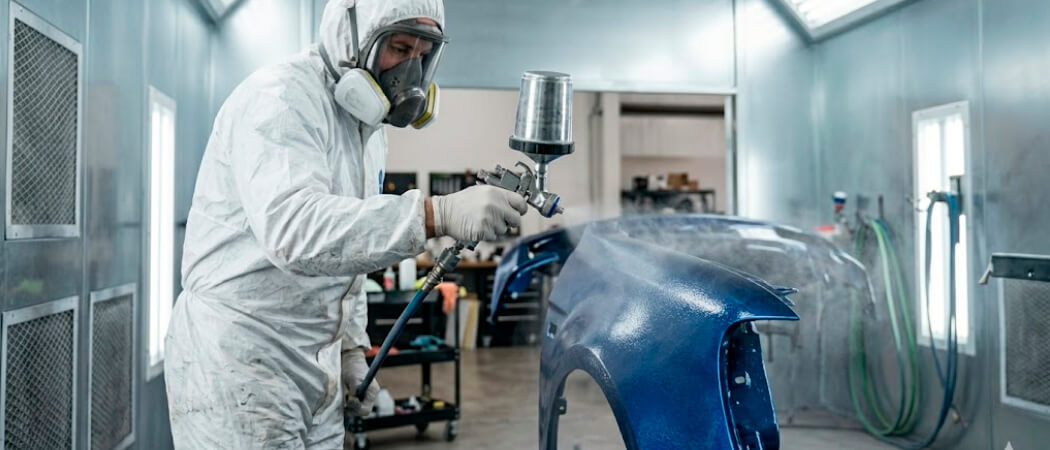
The repair method depends on how severe the orange peel is and which layer contains the defect. If the problem is only on the surface of the clear coat, it can often be corrected with wet sanding and polishing. If the defect is already in the color coat, primer, or the complete coating system, the surface may need to be rebuilt.
If the surface is only slightly textured and there is enough clear coat, proper machine polishing can significantly improve the result. Starting with a more aggressive compound and finishing with a finer polish can create a smoother and glossier surface.
Important: polishing does not always remove orange peel completely. It mainly improves gloss and visually reduces the unevenness. For stronger texture, polishing alone is usually not enough without sanding.
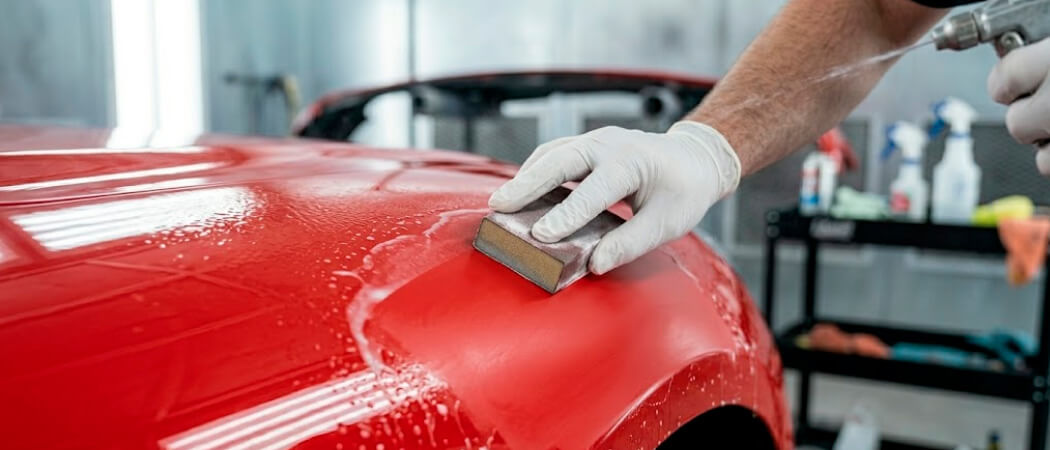
If the clear coat is thick enough, orange peel can be leveled by wet sanding. For general correction, it is best to work with fine grits such as P1500, P2000, and then P3000. The goal is not to sand through the clear coat, but to carefully level the surface texture.
If the orange peel is very deep, the clear coat is too thin, or the defect is also visible in the color coat, sanding and polishing may not give a safe or acceptable result. In this case, the surface must be sanded back and repainted using the correct coating system.
Before repainting, it is especially important to set the material correctly, use the right temperature conditions, spray gun pressure, nozzle size, and flash-off times between coats. If the original cause of the defect remains, the new layer will also become orange peel textured.
| Symptom | Likely cause | Solution |
|---|---|---|
| Slightly textured but glossy surface | Minor flow-out issue | Machine polishing, fine sanding if needed |
| Strong orange peel in the clear coat | Too dry application, incorrect thinning, or fast drying | Wet sanding from P1500 to P3000, then polishing |
| Orange peel visible in the color coat | Incorrect coating system or spraying technique | Sand back and repaint |
| Rough, grainy surface in patches | Material sprayed from too far away and partially dry | Use correct spraying distance and even coats |
Mild or medium orange peel can often be significantly improved, and in some cases completely removed, by wet sanding and polishing. However, there must be enough clear coat for safe correction. If the clear coat is thin or the defect is deep, repainting is the safer solution.
You should always wait for the drying and curing time specified by the manufacturer. If you sand or polish the clear coat too early, the surface may smear, become dull, or get damaged.
Yes. Orange peel can also appear when using aerosol spray cans, especially if you spray from too far away, apply coats that are too dry, use a cold can or cold surface, or if the layers cannot flow out properly.
No. Orange peel is a fine, even texture on the surface, while paint runs occur when the paint or clear coat slides down, builds up, and forms streaks, drops, or waves. The repair method may also be different.
Small areas can be corrected by hand, but on larger panels, proper machine polishing gives a much more even result. Wet sanding must always be done carefully, especially around edges, corners, and curved areas.
Orange peel paintwork is usually a flow-out defect caused by incorrect spraying distance, poor material adjustment, wrong spray gun settings, excessively fast drying, or weak spraying technique. In mild cases, it can be improved by polishing. Medium defects usually require wet sanding and polishing, while severe orange peel often needs repainting for a truly clean result.
The most important rule is to identify which layer contains the defect and whether there is enough clear coat for safe sanding. If there is, the surface can be carefully leveled and polished back to gloss. If not, it is better not to force the correction, because you can easily sand through the clear coat or color coat.
Please sign in first.
Sign inCreate a free account to save loved items.
Sign inCreate a free account to use wishlists.
Sign in



 English
 Magyar
&media=https://www.carcolor.hu/shop/6607-large_default/car-2k-ultra-hs-clearoat-31-set-15l.jpg)
&media=https://www.carcolor.hu/shop/8666-large_default/debeer-8-214-hs-scratch-resistant-clear-5l.jpg)
&media=https://www.carcolor.hu/shop/8681-large_default/debeer-8-714-hs420-supreme-clear-coat-5l.jpg)


&media=https://www.carcolor.hu/shop/17568-large_default/debeer-8-774-2k-2k-multi-clear-allround-clear-1l.jpg)
&media=https://www.carcolor.hu/shop/17572-large_default/debeer-8-774-2k-2k-multi-clear-allround-clear-5l.jpg)