



In stock
4,724 Ft
(tax incl.)
Online price
Filler primer sprays for automotive refinishing and body repair, designed to refine sanding marks, minor scratches and small surface irregularities before painting. Sandable primer surfacers for local repairs and surface preparation.
The range includes 1K and 2K filler primer aerosols in different shades and build levels. Always select the product according to the substrate, repair depth and complete refinishing system.
Filler primer spray, also known as primer surfacer, is designed to create a buildable intermediate coating that helps refine small sanding marks, scratches and minor surface irregularities before the colour coat is applied.
After suitable drying, a sandable filler primer can be refined to create a smoother, more uniform substrate for subsequent refinishing.
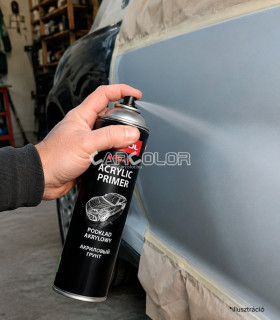
Aerosol application is particularly practical for spot repairs, local bodywork repairs and smaller components where preparing a separate spray gun and compressor is unnecessary.
Depending on the individual product, filler primer can be used to:
Filler primer does not replace body filler. Deep scratches, dents, substantial material loss and major surface defects require suitable repair materials first.
The terms filler primer, primer surfacer and spray putty are sometimes used for similar products, but they do not necessarily describe identical film build or filling performance.
A primer surfacer normally provides a sandable intermediate layer for refining minor defects, while products described as spray putty may offer greater build. Actual film thickness and filling ability always depend on the individual product specification.
1K filler primer spray is a single-component, ready-to-use aerosol system. No separate hardener needs to be activated, making it a convenient solution for smaller refinishing repairs.
Individual 1K products can differ considerably in build, drying time, sanding characteristics and substrate compatibility.
2K filler primer spray contains a separate hardener component that is activated before use. Once activated, chemical curing begins and the usable working life of the aerosol becomes limited.
Depending on the formulation, 2K filler systems can provide higher build, faster curing, improved sanding characteristics or enhanced coating performance.
Only activate a 2K aerosol when the substrate is fully prepared and ready to be sprayed.
Filler primer and epoxy primer do not necessarily serve the same primary purpose. A filler primer is generally intended to refine the surface and provide build, while epoxy primer is commonly selected for adhesion and corrosion protection.
Some specialist 2K epoxy primers also provide useful filling properties, so certain products can perform more than one function.
Select the system according to the substrate and the complete refinishing process.
Approved substrates vary by product. Depending on its specification, a filler primer can be suitable for:
Not every filler primer can be applied directly to aluminium, galvanised steel, plastics or all bare metals. A separate adhesion, epoxy or corrosion-protection primer may be required.
On raw plastic, filler primer should not automatically be applied as the first coating. Many plastic substrates require a suitable plastic adhesion promoter first.
Where the coating system allows it, a compatible primer surfacer can then be applied over the adhesion promoter to refine the repaired surface.
A filler primer cannot compensate for a contaminated or unstable substrate.
The correct spray distance, number of coats, film build, drying time and sanding procedure are product-specific.
One of the key characteristics of a sandable filler primer is that the surface can be refined after drying. However, the correct abrasive grade depends on the product, substrate condition and subsequent colour coat.
There is no universal abrasive grade for every filler primer. Follow the sanding recommendations for both the primer and the subsequent refinishing system.
Filler primers are available in different shades. Selecting an appropriate primer shade can improve colour-coat hiding and reduce the number of colour coats required.
Where available, follow the refinishing-system manufacturer's recommended undercoat shade.
Body filler is used to repair larger depressions, dents and more substantial surface defects. Filler primer is intended for the finer stage of surface refinement after those repairs have been completed.
A typical repair sequence may therefore include body repair, filler, sanding, suitable primer, filler primer, final sanding, colour and clear coat where required.
Filler primer spray is particularly convenient for spot repairs, smaller bodywork repairs and individual components where mixing a spray-gun primer surfacer would be unnecessary.
For complete panels or large professional repairs, a spray-gun-applied primer surfacer may provide greater efficiency and control.
Use filler primer aerosols only in the working environment specified by the manufacturer. Provide suitable ventilation and use the respiratory, eye and skin protection required by the product label and safety data sheet.
2K aerosols require particular attention to the specified working environment and respiratory protection.
It is used to refine minor sanding scratches, small surface defects and irregularities while creating a smooth, sandable base before subsequent paint coatings.
The terms are often used for the same or closely related product types. Actual film build, filling performance and application requirements depend on the individual product specification.
1K filler primer is single-component and ready to use. A 2K aerosol contains a separate hardener that is activated before use, after which chemical curing begins and working time becomes limited.
Most sandable primer surfacers are refined after suitable drying before the colour coat. Follow the abrasive and sanding recommendations for the individual product.
No. Filler primer is intended for minor sanding marks and fine surface irregularities. Deeper scratches, dents and larger defects require suitable body filler or other repair materials.
Only where the manufacturer approves the product for the specific metal substrate. Other systems may require an epoxy, anti-corrosion or other suitable primer first.
Choose the primer shade according to the subsequent colour coat where possible. Light primers can help beneath light colours and darker primers beneath darker colours, but the paint-system manufacturer's recommendation takes priority.
Please sign in first.
Sign inCreate a free account to save loved items.
Sign inCreate a free account to use wishlists.
Sign in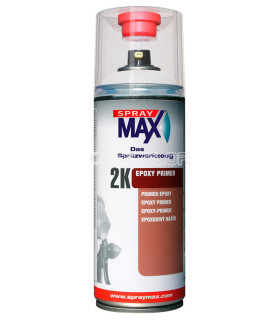






 English
 Magyar
&media=https://www.carcolor.hu/shop/12238-large_default/car-rep-professional-filler-gray-400ml.jpg)
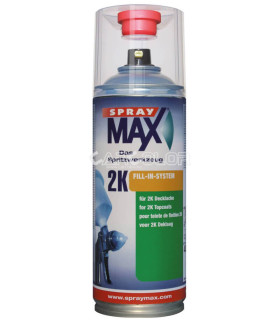
&media=https://www.carcolor.hu/shop/17894-large_default/spraymax-2k-epoxy-primer-filler-400ml.jpg)
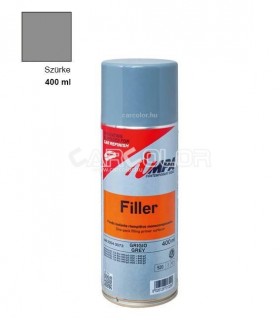
&media=https://www.carcolor.hu/shop/15454-large_default/2004-filler-spray-1k-gray-400ml.jpg)
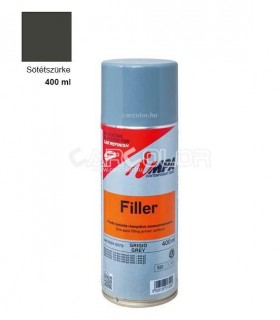
&media=https://www.carcolor.hu/shop/15681-large_default/2004-filler-spray-1k-darkgray-400ml.jpg)
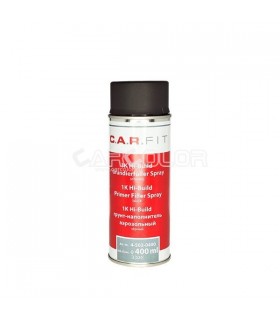
&media=https://www.carcolor.hu/shop/7593-large_default/car-fit-1k-hi-build-primer-filler-spray-gray-400-ml.jpg)
&media=https://www.carcolor.hu/shop/7592-large_default/car-fit-1k-hi-build-primer-filler-spray-white-400-ml.jpg)
&media=https://www.carcolor.hu/shop/7590-large_default/car-fit-1k-hi-build-primer-filler-spray-black-400-ml.jpg)
 White&media=https://www.carcolor.hu/shop/16697-large_default/debeer-1-16503-1k-spot-primer-400ml-white.jpg)
 Light Grey&media=https://www.carcolor.hu/shop/16703-large_default/debeer-1-16505-1k-spot-primer-400ml-light-grey.jpg)
 Mid Grey&media=https://www.carcolor.hu/shop/16706-large_default/debeer-1-16507-1k-spot-primer-400ml-mid-grey.jpg)
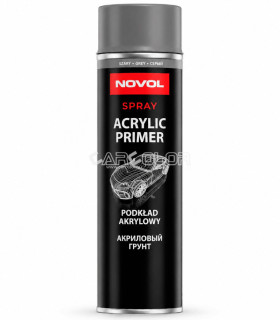
&media=https://www.carcolor.hu/shop/17791-large_default/novol-acrylic-primer-p3-grey-aerosol-acrylic-primer-500ml.jpg)
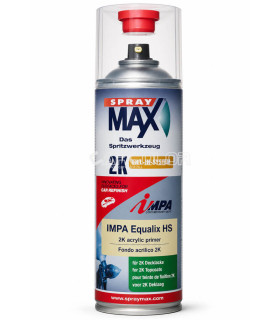
&media=https://www.carcolor.hu/shop/17812-large_default/2k-spraymax-hs-filler-spray-grey-400ml.jpg)