

Why Does Car Paint Peel? Causes and Repair Tips
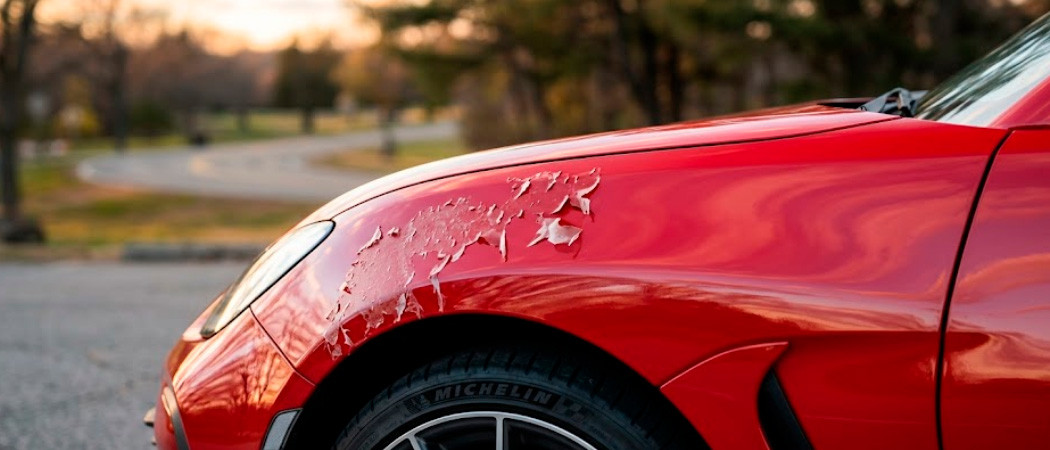
Car paint peeling is most often caused by an adhesion problem. The background may include poor degreasing, insufficient sanding, incorrect priming, rust, excessively thick paint layers, or material incompatibility.
Car paint peeling is not only an aesthetic defect, but also a serious warning sign. If the paint layer starts to flake, lift, or blister, the coating has lost adhesion somewhere. This can happen on factory paintwork, repaired panels, plastic bumpers, old clear coat layers, or even freshly painted surfaces.
In most cases, the problem is not caused by the “poor quality” of the paint itself, but by improper surface preparation, incorrect priming, rust, contamination, or a faulty layer structure. In this article, we explain why car paint peels, how to identify the causes, and what can be done to achieve a durable repair.
Contents
What does paint peeling mean?
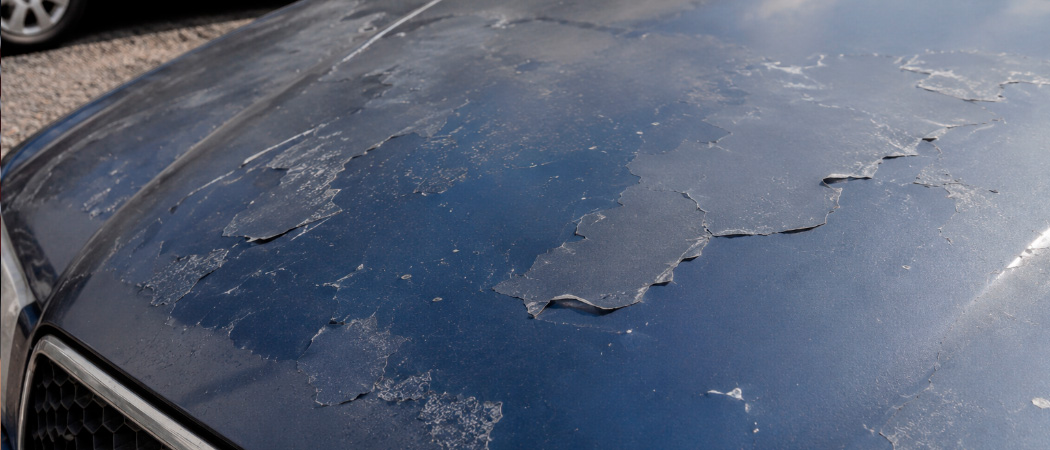
Paint peeling occurs when the paint, clear coat, primer, or even the entire coating system separates from the surface underneath. This may appear as small circular chips, larger peeling areas, blistering, raised paint edges, or a layer that can even be lifted with a fingernail.
The problem is serious because the paintwork no longer protects the bodywork properly in the damaged area. On metal panels, moisture and road salt can quickly start corrosion, while on plastic elements the peeling can continue to spread. The longer the defect remains untreated, the larger the area that may need repair later.
The most common causes of paint peeling
There can be several reasons behind peeling car paint. Before repairing the damage, it is always important to understand why the coating is not adhering properly.
- Poor degreasing: if oil, wax, silicone, dust, or fingerprints remain on the surface, the paint cannot adhere properly.
- Insufficient sanding: a glossy, smooth clear coat does not provide proper grip for the new paint. The surface must always be scuffed.
- Incorrect primer: bare metal, plastic, old paint, and repaired surfaces do not always require the same type of primer.
- Lack of plastic primer: paint can easily peel from bumpers, trim strips, or mirror housings if an adhesion promoter is not used.
- Rust under the paint: rust continues to work beneath the layer, pushes up the coating, and eventually causes blistering and peeling.
- Excessively thick paint layer: if too much material is applied at once, the solvent has more difficulty escaping, and the layer may later crack or peel.
- Incompatible materials: some old paints, 1K and 2K materials, primers, or clear coats cannot always be combined without issues.
- Stone chips: gravel impact damages the clear coat and color layer, allowing moisture to get underneath the coating.
- Incorrect temperature or humidity: in cold, excessively humid, or dusty conditions, both adhesion and drying quality can deteriorate.
- Ageing caused by UV radiation: prolonged sunlight can gradually dry out and weaken the clear coat, causing it to become dull, crack, and eventually peel.
How can paint peeling be prevented?
The basis of durable paintwork is always careful preparation. The surface must first be cleaned and then thoroughly degreased. This is followed by sanding or scuffing, which ensures that the primer and paint can grip the surface properly.
On bare metal, corrosion protection is essential. It is not enough to simply spray primer over a rusty surface: the rust must first be mechanically removed. On plastic parts, an adhesion promoter primer must be used, because a smooth plastic surface alone may provide poor adhesion.
Paint should always be applied in several thin coats. One thick coat may seem faster visually, but it is more likely to run, wrinkle, dry slowly, and later peel. The manufacturer’s drying times must be followed for every layer.
What can be done if the paint has already peeled?
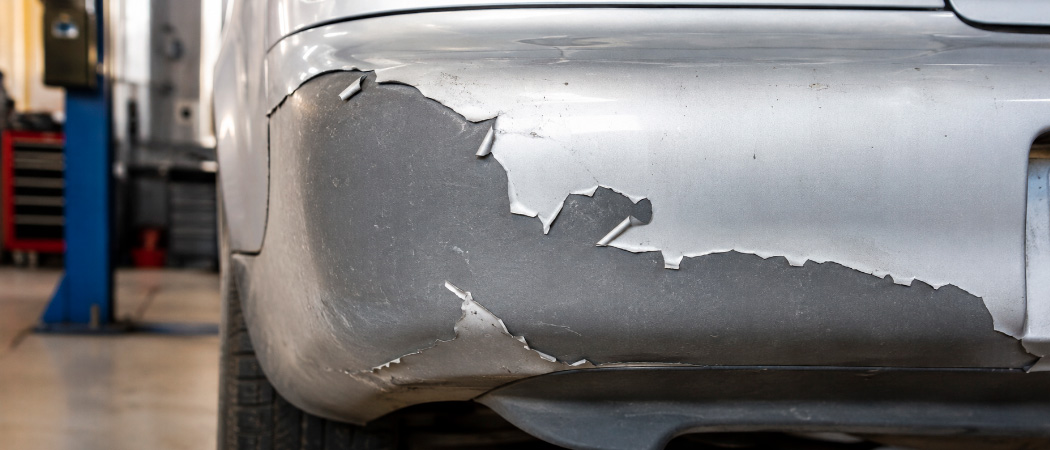
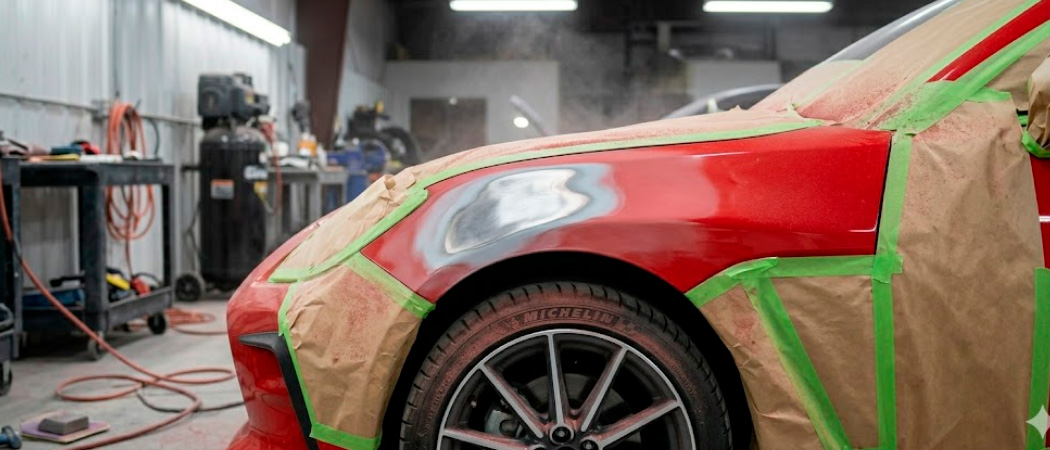
If the paint has already peeled, the damaged area must not simply be sprayed over. Loose, flaking paint must be completely removed, then the surface must be sanded back to a stable base. The paint edges should be feathered carefully so that there is no sharp edge between the old and new layers.
General repair process step by step:
- Remove loose layers: all lifted, flaking, or blistered areas must be removed.
- Sand back to a stable base: continue sanding until only firmly adhering material remains.
- Degrease: sanding dust, oil, wax, and other contamination must be removed.
- Apply the correct primer: use a primer suitable for the specific surface, whether metal, plastic, or a repaired area.
- Apply the color coat: spray several thin coats, allowing drying time between layers.
- Apply clear coat: metallic and pearl colors usually require a transparent clear coat layer.
Small stone chips and local defects can also be repaired at home, but larger, rusty, or multi-layer peeling should be handled by a professional. Poorly repaired peeling can quickly return.
Quick troubleshooting table
| Symptom | Likely cause | Solution |
|---|---|---|
| Paint can be scraped off with a fingernail | Poor adhesion, inadequate degreasing | Sand back, clean, and re-prime |
| Paint peels from the bumper | Plastic primer was omitted | Use an adhesion promoter primer |
| Paintwork is blistering | Rust, moisture, or trapped solvent | Fully expose the defect, remove rust, rebuild the coating system |
| Peeling spreads around a stone chip | Moisture has entered through the damage | Clean the damaged area, apply primer, use touch-up paint |
Frequently asked questions about car paint peeling (FAQ)
Can peeling car paint be repaired at home?
Smaller local peeling defects can be repaired at home if you remove the loose paint, sand back the surface, degrease it, and use the correct primer. For larger or rusty damage, professional repair is recommended.
Is it enough to simply spray new paint over the damaged area?
No. If new paint is applied over a poorly adhering, flaking layer, the new coating will also peel off quickly. The damaged area must first be sanded back to a stable base.
Why does paint peel from a plastic bumper?
Most commonly because the plastic adhesion promoter primer was omitted. A bumper is a flexible and smooth surface, so without proper preparation the paint will not adhere durably.
Can rust cause paint peeling?
Yes. Rust can continue spreading under the paint layer, push up the coating, and cause blistering and peeling. Rust must not simply be covered; it must be removed.
How can a repaired paint finish be made more durable?
A durable repair requires a clean, degreased, and matted surface, the correct primer, paint applied in thin coats, and proper drying times. Metallic and pearl colors must also be protected with a clear coat layer.
Summary
Car paint peeling is most often caused by an adhesion problem. The background may include poor degreasing, insufficient sanding, incorrect priming, rust, excessively thick paint layers, or material incompatibility.
A durable repair does not mean simply spraying over the defect. The damaged layer must be removed, the surface must be worked back to a stable base, and the correct coating system must be built up. This way, the repaired surface will not only look better, but will also remain more resistant in the long term.


Related products





In stock
3,048 Ft
(tax incl.)
Online price
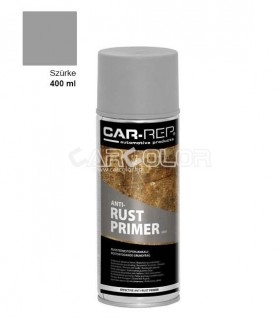
Fast-drying synthetic high-build primer with active corrosion protection (zinc-phosphate) for steel substrates. For interior and exterior use. Recoatable with 1K and 2K paints.


In stock
7,911 Ft
(tax incl.)
8,990 Ft
Online price
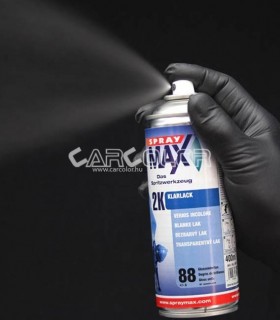
Professional 2-component HS clear coat spray filled with premium scratch-resistant lacquer. It offers high filling capacity, high gloss, excellent leveling, durability, and ease of use for all work phases requiring...
 English
 Magyar
 - OFO&media=https://www.carcolor.hu/shop/15340-large_default/silicone-remover-1l-ofo.jpg)
&media=https://www.carcolor.hu/shop/15358-large_default/prepaint-cleaner-500ml.jpg)
&media=https://www.carcolor.hu/shop/12208-large_default/car-rep-anty-rust-primer-grey-400ml.jpg)
&media=https://www.carcolor.hu/shop/16680-large_default/car-fit-antirust-primer-grey-1kg.jpg)
&media=https://www.carcolor.hu/shop/11920-large_default/spraymax-rapid-two-2k-lacquer-gloss-400ml.jpg)
&media=https://www.carcolor.hu/shop/17121-large_default/spraymax-hs-2k-lacquer-gloss-400ml.jpg)